Multisystem Implications Of Sjögren’s Syndrome
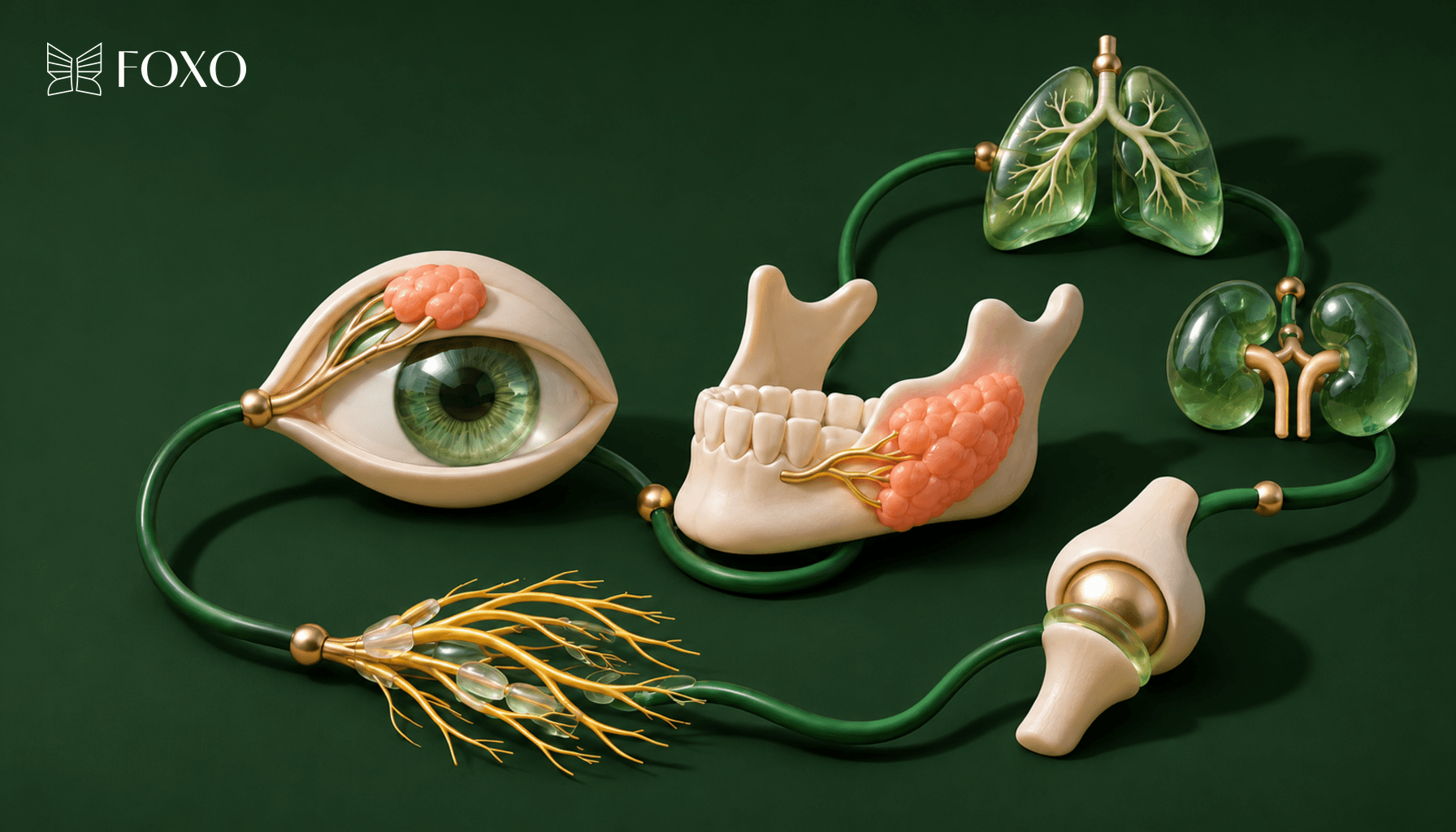
Dry eyes are only the surface. Sjögren’s quietly destabilises glands, lungs, nerves, and immunity, demanding earlier detection and system‑wide care.
By Sowmya Didla · 4 November 2026
Unless you have a genuine interest in the field or are deep in the medical weeds, it’s unlikely you have heard of this syndrome. I have historically stayed as far away from science as I could, but sometimes science comes to you.
If you find yourself relating to this article a little more than you should, it might be your cue to see a doctor. And if you find this read helpful, drop a like – translating science is hard! Let’s dig in.
What Is Sjögren’s Syndrome?
Sjögren’s syndrome (or Sjögren disease) is a chronic autoimmune condition where the immune system mistakenly targets its own tissues. It specifically goes after the body’s exocrine glands – the lacrimal glands (which produce tears) and the salivary glands (which produce saliva). The hallmark results are exactly what you’d expect: burning, dry eyes and a mouth that feels dry even when you’ve had enough water.
There are two recognised forms:
- Primary Sjögren’s: Occurs entirely on its own.
- Secondary Sjögren’s: Occurs alongside other autoimmune diseases, like rheumatoid arthritis or lupus.
By the time the true nature of the disease is identified, damage is often no longer localised – which is what makes it scary.
Sjögren’s is diagnosed much more often in women, and it frequently becomes apparent during midlife. But it is not exclusively a women’s condition, and it can develop at other ages too. Men and gender-diverse people can also have Sjögren’s, even if they do not fit the demographic profile most people associate with it.
What Happens In The Immune System?
At its core, Sjögren’s is a story about the immune system losing its tolerance. Essentially, it becomes less able to distinguish between something dangerous and the body’s own healthy tissue.
Immune cells, including B and T lymphocytes, begin gathering around moisture-producing glands. The salivary glands make saliva, while the lacrimal glands make tears. When immune activity repeatedly disrupts these tissues, the glands may produce less moisture and become less effective at protecting the eyes and mouth.
Chemical messengers are involved too. Signals such as interferons and B-cell activating factor, usually called BAFF, can behave like fire alarms that do not switch off properly. They keep recruiting and activating immune cells, helping the inflammatory response sustain itself.
You may also hear doctors mention anti-Ro/SSA and anti-La/SSB antibodies. Anti-Ro/SSA is included in the current classification criteria; anti-La/SSB may provide additional context but is not an independent criterion. These results cannot show how widespread the disease is on their own. They must be interpreted alongside symptoms, examination findings, tear and saliva tests and, in some cases, a salivary-gland biopsy.
What May Contribute To Sjögren’s?
Researchers have not identified one single cause. Instead, Sjögren’s appears to develop through a combination of susceptibility and immune-system disruption: less like one switch being flipped and more like several pieces falling into place.
Some of the factors being studied include:
- Genetics: Certain genetic variants, including ones involved in immune regulation, may make a person more susceptible. Having these variants does not mean that Sjögren’s is inevitable.
- Hormonal and biological factors: Sjögren’s is diagnosed far more often in women, suggesting that hormonal and sex-related immune differences may contribute. The exact relationship is still being studied.
- Environmental exposures: Infections and other environmental influences may affect immune behaviour in a person who is already susceptible.
- Viral infections: Viruses such as Epstein–Barr virus have been investigated as possible contributors to autoimmune activation. However, an association does not prove that a virus directly causes Sjögren’s.
- Epigenetics: These are changes in how cells read and use genetic information. They may help explain how genes, immune activity and environmental exposures interact.
Together, these factors may create an inflammatory feedback loop: immune activity damages tissue, damaged tissue releases further signals, and those signals keep the immune response switched on.
The Symptoms: More Than Just Dry Eyes
Sjögren’s does not look the same in everyone. Some people mainly experience dryness, while others develop fatigue, pain or problems involving additional organs.
The Glands
The most recognisable symptoms come from the exocrine glands, the body’s moisture makers.
- Dry mouth, or xerostomia: This is more than feeling thirsty. A dry mouth can make it difficult to chew, swallow, speak for long periods or eat dry foods. Because saliva protects the mouth, reduced saliva can also increase the risk of dental decay, gum disease, mouth ulcers and oral infections such as thrush.
- Dry eyes: People often describe burning, grittiness, itching or the feeling that something is trapped in the eye. Without a healthy tear film, the surface of the eye can become irritated or damaged. New eye pain, marked sensitivity to light or changes in vision need prompt assessment.
- Swollen salivary glands: The glands around the jaw or in front of the ears may become swollen or uncomfortable. Persistent or one-sided swelling should be discussed with a doctor.
Dryness can also affect other areas, including the nose, throat, airways, skin and vagina. The symptoms and their severity vary considerably between people.
Sjögren’s may begin with dryness, but it is not always confined to the eyes and mouth. In some people, immune activity affects other parts of the body. These systemic manifestations do not necessarily develop in a predictable order, and severe dryness does not always mean severe systemic disease, or vice versa.
- Joints and muscles: Joint pain, stiffness and muscle aching can make Sjögren’s resemble other rheumatic conditions. Some people develop inflammatory arthritis, although this is not the same as automatically having rheumatoid arthritis.
- Fatigue: This can be a profound, heavy tiredness that sleep does not completely fix. Fatigue may be influenced by disease activity, pain, poor sleep, medicines, mood, thyroid problems, anaemia or other conditions, so it deserves a proper assessment rather than being dismissed as “just part of Sjögren’s.”
- Lungs and airways: Sjögren’s can be associated with airway dryness and inflammation, persistent coughing or breathlessness. A smaller group develops interstitial lung disease, in which inflammation or scarring affects lung tissue.
- Kidneys: The condition can sometimes affect the kidney tubules responsible for balancing acids and electrolytes. One possible complication is renal tubular acidosis. Kidney involvement may not produce obvious early symptoms, which is why blood and urine findings can matter.
- Nervous system: Nerve involvement can produce burning, tingling, numbness, unusual sensitivity to pain or weakness. Small-fibre neuropathy is one example, but neurological symptoms can have many other causes and need their own assessment.
- Blood vessels: Inflammation of blood vessels, known as vasculitis, can sometimes occur. Depending on the vessels involved, this may cause skin changes, nerve problems or effects elsewhere in the body.
- Blood and immune system: Some people develop changes such as low blood-cell counts, abnormal immune proteins, low complement levels or cryoglobulins. These findings do not all mean the same thing, so doctors interpret them alongside symptoms, examination findings and other tests.
The important point is not that everyone with Sjögren’s will develop these complications. Most will not experience every manifestation on this list. The point is that new symptoms should be assessed on their own merits rather than automatically blamed on dryness, ageing or stress.
Why Doctors Monitor Lymphoma Risk
If you start Googling Sjögren’s, you will inevitably come across lymphoma. Sjögren’s is associated with a higher risk of certain B-cell lymphomas than is seen in the general population, but most people with Sjögren’s do not develop lymphoma.
The increased risk appears to be connected to persistent B-cell activation and immune dysregulation. Doctors therefore pay attention to particular clinical and laboratory patterns rather than treating everyone as though they have the same level of risk.
Features that may justify closer assessment include:
- Salivary glands that remain enlarged or become progressively swollen
- Enlarged lymph nodes
- Unexplained fever, night sweats or weight loss
- Cryoglobulins or a monoclonal protein in the blood
- Persistently low complement levels, particularly low C4
- Certain changes in blood-cell counts or disease activity
None of these findings automatically means that lymphoma is present. They are signals that may prompt a clinician to look more closely, repeat tests or arrange specialist investigation.
Monitoring should therefore be personalised. Someone whose Sjögren’s is limited mainly to dryness may not need the same follow-up as someone with persistent gland swelling, systemic inflammation or several recognised risk features.
How Is Sjögren’s Syndrome Diagnosed?
There is no single test that can diagnose Sjögren’s on its own. Instead, doctors piece together your symptoms, medical history, examination findings, blood results and objective measurements of tear and saliva production.
The Blood Work: Doctors may test for autoantibodies associated with Sjögren’s, particularly anti-Ro/SSA and anti-La/SSB. Anti-Ro/SSA can provide important support for a diagnosis, while anti-La/SSB is interpreted alongside the rest of the clinical picture. They may also check antinuclear antibodies (ANA), rheumatoid factor (RF), complement levels, blood-cell counts and other signs of immune activity or systemic involvement.
The Moisture Tests: Because feeling dry is subjective, clinicians use specific tests to measure how well the eyes and salivary glands are working.
- The Schirmer Test: An eye-care professional places a small, standardised strip of filter paper inside the lower eyelid to measure tear production.
- Ocular Surface Staining: Special eye drops help reveal areas where dryness may have damaged the surface of the eye.
- Saliva-Flow Testing: This measures how much saliva you produce over a set period. It may involve collecting saliva while the mouth is at rest or after the glands have been stimulated.
The Lip Biopsy: If the diagnosis remains uncertain, a doctor may recommend a minor salivary-gland biopsy. A small tissue sample is taken from inside the lower lip and examined for focal lymphocytic sialadenitis, which means clusters of immune cells have gathered around the salivary-gland tissue.
The results are considered together. A positive antibody test, an abnormal dryness test or a biopsy finding can support the diagnosis, but each result needs to be interpreted within the person’s wider clinical picture.
Living With Sjögren’s: How To Protect Your Body
Living with Sjögren’s is not only about managing dryness. It also means protecting the tissues most affected by reduced tears and saliva, noticing meaningful changes early and matching your follow-up to how the condition affects you.
Protecting Your Eyes
Persistent dry eye can irritate and damage the surface of the eye. An optometrist or ophthalmologist can assess the tear film and eye surface before recommending suitable lubricants or prescription treatment.
Red flag: Seek prompt medical attention if you develop new eye pain, marked sensitivity to light or changes in your vision. These symptoms need proper assessment, not simply another bottle of over-the-counter drops.
Protecting Your Mouth And Teeth
Saliva protects the teeth, gums and soft tissues of the mouth. When saliva production falls, the risk of tooth decay, gum disease and oral infections such as thrush can increase.
Regular dental care is an important part of Sjögren’s management. Depending on your needs, a dentist may recommend prescription-strength fluoride, more frequent check-ups or other preventive treatment. Frequent sips of water and sugar-free gum or lozenges may also help stimulate or replace moisture.
Tracking The Bigger Picture
Sjögren’s can change over time, so follow-up should change with it. Someone whose symptoms are mainly dry eyes and a dry mouth may not need the same monitoring as someone with lung, kidney, nerve or blood-vessel involvement.
- Build the right care team: Care often involves a rheumatologist, dentist and eye-care professional. A pulmonologist, neurologist, kidney specialist or another clinician may be added when particular symptoms or organs need attention.
- Watch for meaningful changes: Report persistent gland swelling, enlarged lymph nodes, unexplained fever, night sweats, weight loss, breathlessness, weakness, numbness or other new symptoms. These signs can have several causes, but they should not be ignored or automatically blamed on Sjögren’s.
- Make monitoring personal: Blood tests, urine tests, imaging and disease-activity assessments may be used when clinically appropriate. ESSDAI is one tool specialists can use to assess systemic disease activity, but it is not a score that every person needs checked at every appointment.
- Plan pregnancy early: If you are pregnant or planning a pregnancy and have anti-SSA/Ro or anti-SSB/La antibodies, speak with your rheumatology and obstetric teams early. These antibodies can cross the placenta, so your clinicians may recommend a specific monitoring plan before and during pregnancy.
The goal is not to assume that every new symptom comes from Sjögren’s. It is to know what deserves attention, protect vulnerable tissues and make sure the level of care reflects the person’s actual pattern of disease.
Where Can FOXO Fit?
FOXO sits alongside clinical care. It can bring together your health history, symptoms, routines and available test results so that priorities and questions are easier to see. FOXO cannot diagnose Sjögren’s, rule it out or replace a rheumatologist, ophthalmologist, dentist or other treating clinician.
If You Are Establishing A Starting Point
FOXO Primer is one assessment cycle designed to provide a measured starting point. It includes a detailed health and symptom assessment in the FOXO app, home collection of blood and urine samples, a Doctor-reviewed Playbook, one 30-minute Playbook consultation and 12 months of support from OME, FOXO’s AI health coach. For someone experiencing persistent dryness or a wider pattern of symptoms, Primer may help organise the information already available and identify useful questions for a doctor.
If You Already Have A Diagnosis Or Health Plan
FOXO Ascent is a goal-based programme for people whose needs call for longer support, repeat measurement or coordinated professional involvement. Its duration, testing cycles, assessments, Doctor consultations and coaching are set in the member’s confirmed plan.
For someone living with Sjögren’s or another diagnosed condition, Ascent may help organise monitoring, support an agreed plan and connect the work of different professionals. It does not replace specialist care.
Sjögren’s can be difficult to recognise because its symptoms are often considered separately. Dry eyes go to one doctor, dental problems to another, while fatigue, joint pain or tingling may seem unrelated. The next step is not to diagnose yourself from a list. It is to bring those details together, note what has changed and take the full picture to a qualified clinician.
Sometimes science comes to you. When it does, you do not need to become an expert or stay buried in the medical weeds. Understanding enough to notice the pattern and ask a better question is a good place to start.
Frequently Asked Questions
No. Medicines, dehydration, menopause, diabetes, thyroid disease, eye conditions and other causes can produce similar symptoms. Persistence, the combination of symptoms and objective tests help a clinician decide what to investigate.
No blood test can diagnose Sjögren’s on its own. Anti-Ro/SSA antibodies are included in current classification criteria, while anti-La/SSB antibodies may provide additional context but are not an independent criterion. Some people with Sjögren’s do not have anti-Ro/SSA antibodies, and a positive result can occur in other autoimmune conditions.
Early signs of Sjögren’s syndrome in women may include persistently dry or burning eyes, a dry mouth despite drinking enough water, difficulty swallowing dry food, unusual fatigue, joint pain, or recurrent swelling around the salivary glands. These symptoms can overlap with menopause, medicine side effects, thyroid conditions, and other causes, so the pattern needs clinical assessment rather than self-diagnosis.
Men can experience the same Sjögren’s syndrome symptoms as women, including dry eyes, dry mouth, fatigue, joint pain, gland swelling, nerve symptoms, and effects involving other organs. Because Sjögren’s is diagnosed less often in men, symptoms should not be dismissed simply because someone does not fit the usual demographic profile.
Sjögren’s syndrome can be hard to diagnose because its symptoms may develop gradually, affect different parts of the body, and resemble more common conditions. There is also no single test that confirms every case. Doctors consider symptoms, examination findings, antibody results, tear and saliva measurements, and sometimes a salivary-gland biopsy together.
Most people with Sjögren’s do not develop every systemic complication. However, lung, kidney, nervous-system or blood-vessel involvement, as well as lymphoma, can affect health and prognosis in a smaller group. Sjögren’s syndrome life expectancy therefore cannot be predicted from the diagnosis alone; it depends on the person’s clinical pattern, organ involvement, and risk factors.
Sjögren’s syndrome treatment depends on the symptoms and organs involved. Dry eyes and dry mouth may require lubricants, saliva-supporting measures, prescription treatments, and regular eye and dental care. Systemic disease may require treatment from a rheumatologist or another specialist. There is currently no single treatment that cures Sjögren’s.
No. FOXO Primer may help organise a person’s health history, symptoms, routines, and included test results into a Doctor-reviewed Playbook, but it is not a Sjögren’s diagnostic service. FOXO Ascent may support an agreed health plan when longer, plan-specific monitoring or professional involvement is appropriate. OME can explain approved Playbook information but cannot diagnose a flare, prescribe treatment, or replace specialist care.
Medical Disclaimer
This article is for general education and does not diagnose, treat or replace individual medical advice. Seek urgent care for severe or rapidly worsening symptoms. Do not start, stop or change prescribed medicine without guidance from a qualified clinician.
Tags

Written by:
Sowmya Didla

- Theander, E., Manthorpe, R., Jacobsson, L.T.H., ‘Mortality and Causes of Death in Primary Sjögren’s Syndrome: A Prospective Cohort Study’, Arthritis & Rheumatism, vol. 50, no. 4, 2004, pp. 1262–1269. [link]
- Singh, A.G., Singh, S., Matteson, E.L., ‘Rate, Risk Factors and Causes of Mortality in Patients with Sjögren’s Syndrome: A Systematic Review and Meta-analysis of Cohort Studies’, Rheumatology (Oxford), vol. 55, no. 3, 2015, pp. 450–460. [link]
- Huang, H., Xie, W., Geng, Y., Fan, Y., Zhang, Z., ‘Mortality in Patients with Primary Sjögren’s Syndrome: A Systematic Review and Meta-analysis’, Rheumatology (Oxford), vol. 60, no. 9, 2021, pp. 4273–4284. [link]
- Maleki-Fischbach, M., Kastsianok, L., Koslow, M., Chan, E.D., ‘Manifestations and Management of Sjögren’s Disease’, Arthritis Research & Therapy, vol. 26, 2024, p. 43.
[link] - Brito-Zerón, P., Flores-Chávez, A., Horváth, I.F., Rasmussen, A., Li, X., Olsson, P., Vissink, A., Priori, R., Armagan, B., Hernandez-Molina, G., Praprotnik, S., Quartuccio, L., Inanç, N., Özkızıltaş, B., Bartoloni, E., Sebastian, A., Romão, V.C., Solans, R., Pasoto, S.G., … Ramos-Casals, M.; Sjögren Big Data Consortium, ‘Mortality Risk Factors in Primary Sjögren Syndrome: A Real-World, Retrospective, Cohort Study’, EClinicalMedicine, vol. 61, 2023, article 102062. [link]
- Huo, R., Huang, X., Lin, J., ‘Mortality Associated with Sjögren’s Syndrome in the United States in the 1999–2020 Period: A Multiple Cause-of-Death Study’, Open Medicine (Warsaw), vol. 18, no. 1, 2023, article 20230829.[link]
- Carsons, S.E., Patel, B.C., ‘Sjögren Syndrome’, in StatPearls [Internet], Treasure Island (FL): StatPearls Publishing; 31 July 2023 [link]
Disclaimer: The content on this site is for informational and educational purposes only and should not be considered a substitute for professional medical advice, diagnosis, or treatment. Always consult a qualified healthcare provider before making any changes to your health regimen, especially regarding medical conditions, treatments, or supplements. While FOXO provides science-backed insights into longevity, individual health decisions should be made in partnership with your doctor. In case of urgent health concerns, seek immediate medical attention.