
Lunch is over. Half an hour later, there is a warm burn behind the centre of your chest.
The obvious suspect is whatever was on the plate. Maybe it was the chilli. Maybe the coffee. Maybe the fried food. Maybe you just experience it in the moment, deal with it and it’s all forgotten about it, until the next time it happens. Could be a day, or later that week. But the frequency is most likely higher than – oh this happens rarely!
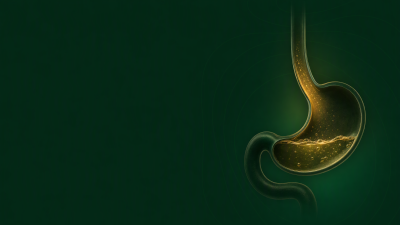
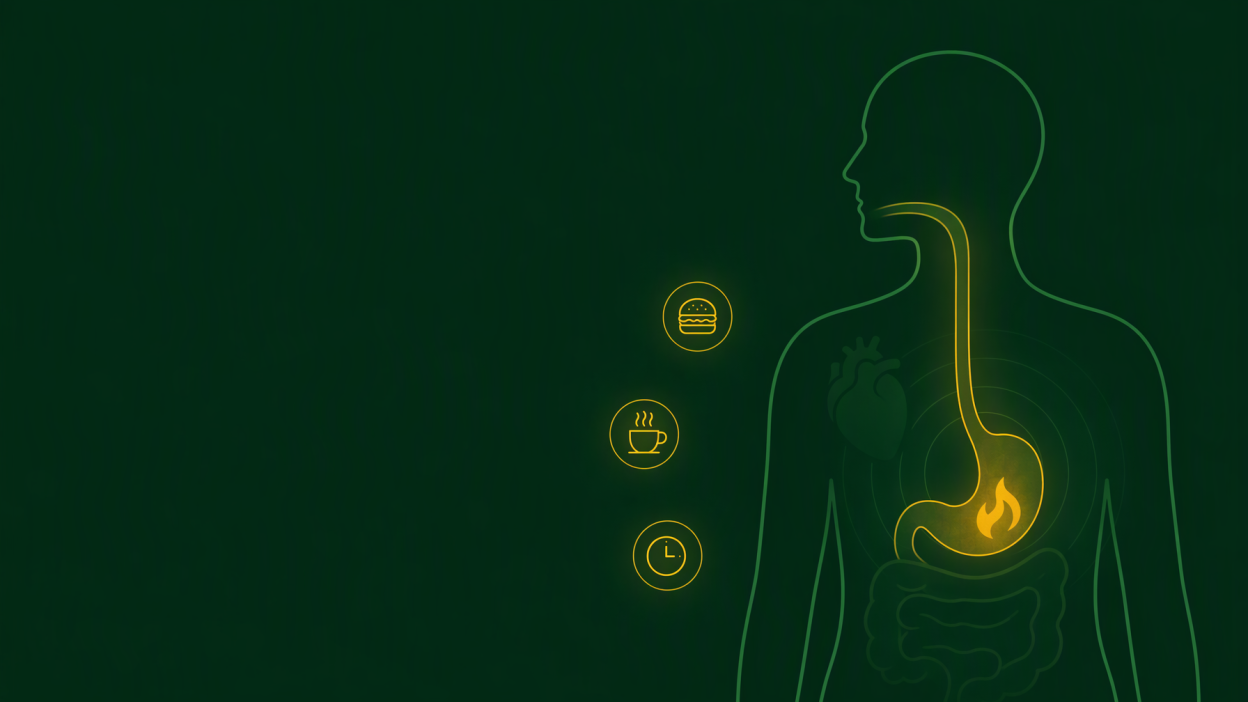
Heartburn is a symptom. It describes the burning feeling that happens when stomach contents move upwards into the oesophagus, the tube carrying food from the mouth to the stomach.
The meal matters because eating changes the pressure, volume and movement inside the upper digestive tract. What you ate is only one part of that.
An occasional episode after a large meal can happen to people who do not have gastro-oesophageal reflux disease, or GERD. If the burning keeps returning, wakes you at night, changes how you eat or has you reaching for medication repeatedly, there is more to investigate than the last meal.
For most people, the short answer is this: heartburn after eating usually happens because a full stomach, certain triggers, body position or reflux mechanics make it easier for stomach contents to move up into the oesophagus. Repeated symptoms deserve a proper medical assessment rather than more guesswork about a single food.
What is actually happening after you eat?
When you eat, the stomach expands to hold the meal. At the top of the stomach, the lower oesophageal sphincter and the diaphragm work together as part of the anti-reflux barrier.
That barrier has to open when food passes into the stomach. It also relaxes briefly at other times. These transient relaxations are normal, but they are also one of the main ways reflux happens after meals.
A fuller stomach creates more distension. That can make reflux events more likely, particularly if the anti-reflux barrier is already less effective.
This helps explain why the same person may be fine after a small lunch and uncomfortable after a very large dinner.
One small crossover study in people with GERD compared the same total food intake given as larger meals or smaller, more frequent meals. The larger meals produced more reflux episodes and more time with acid in the oesophagus. Older physiological studies point in the same direction: meal volume and total calorie load can matter independently of any single ingredient.
So the first question after repeated post-meal heartburn is not always “Which food is bad for me?”
Sometimes it is “How much did I eat, how quickly, and what happened afterwards?”
Is a heavy or high-fat meal always the problem?
Fatty food has a long reputation in reflux advice, but the research is less tidy than the rule.
Some people clearly notice more symptoms after fried or high-fat meals. At the same time, controlled studies have not consistently shown that fat itself increases reflux when meal size and calorie content are kept the same.
Calorie load and volume may explain part of the story. A larger, energy-dense meal stretches the stomach more and can leave more material available to reflux.
That does not mean fat is irrelevant. High-fat meals can still provoke symptoms in some people, and foods are eaten as meals rather than as isolated nutrients. A large plate of fried food may differ from a smaller meal in fat, calories, volume and how long it takes the stomach to empty.
A personal trigger and a disease cause are different claims. “Fatty food gives me heartburn” may be true for you; “fat causes GERD” is much harder to support.
Why does spicy food get blamed so often?
In India, reflux advice can begin and end with “avoid spicy food”.
That is an easy explanation, but it leaves out much of the evidence.
Spice can provoke burning in a sensitive oesophagus, so someone who repeatedly notices symptoms after a very spicy meal is not imagining the relationship. But a food that provokes symptoms is not necessarily the underlying cause of reflux disease.
Indian data make this distinction especially interesting. A 2021 meta-analysis combined nine Indian studies involving more than 20,000 people. The studies varied widely, with reported GERD prevalence ranging from 5% to 28.5%. Factors associated with GERD across the literature included age, body mass index, non-vegetarian diet, tea or coffee intake, tobacco and alcohol. Spice was not one of the pooled risk factors highlighted by the analysis.
That does not prove spicy food can never trigger heartburn. It tells us not to build the entire explanation around it.
If you have heartburn after a meal, ask whether the same food causes symptoms again under similar conditions. One bad evening tells you little; repetition tells you more.
Coffee, tea, chocolate and carbonated drinks: triggers or causes?
These are another group of foods and drinks that appear on almost every reflux list.
The evidence for these foods and drinks is mixed, and the studies do not all point in the same direction.
Large observational studies have linked higher intake of some beverages with reflux symptoms, while other studies have found little or no relationship. Reviews of GERD diet research reach a similar conclusion: common trigger foods are reported often, but the evidence is inconsistent enough that blanket exclusion is difficult to justify.
That uncertainty changes the advice.
If two cups of coffee repeatedly bring on burning, reducing the amount is reasonable. If coffee makes no difference, removing it because a generic list said so may not solve anything.
Use your own repeatable response as the filter instead of building the longest possible list of forbidden foods.
Why lying down after a meal can make heartburn worse
Gravity is doing more work than you notice while you are upright.
After a meal, lying flat removes some of that help. Stomach contents are then more likely to move upwards, especially when the stomach is full or the anti-reflux barrier is already compromised.
This is why current GERD guidelines advise avoiding meals close to bedtime, generally leaving around two to three hours between eating and lying down when night-time symptoms are a problem.
A late dinner is not automatically unhealthy. The issue is the combination of a full stomach, body position and an individual tendency to reflux.
If the burning mainly appears when you lie down, or wakes you during the night, meal timing may tell you more than the ingredient list.
Does eating too quickly matter?
Possibly, although the evidence here is smaller and less certain.
In one physiological study, healthy volunteers who ate the same meal in five minutes had more reflux episodes afterwards than when they ate it over 30 minutes. The difference was mainly seen in the first hour after eating.
A 20-person study in healthy volunteers cannot establish that fast eating causes GERD.
It does fit a broader mechanical picture. Eating quickly can make it easier to overshoot fullness before the body catches up, and a rapidly distended stomach may be more likely to reflux.
If heartburn tends to follow rushed meals, slowing down is a low-risk experiment. The result is more useful if you change one thing at a time rather than rebuilding your whole diet in a day.
Abdominal pressure changes the mechanics too
The stomach does not sit in isolation.
Pressure inside the abdomen affects the force acting on the stomach and the anti-reflux barrier. Central obesity is one established contributor to GERD, and pregnancy can increase reflux through both abdominal pressure and hormonal effects on the sphincter.
This is one reason reflux may appear or become more frequent after weight gain, during pregnancy or when a very large meal leaves the abdomen feeling tight.
It also explains why heartburn after eating is not always about acid production. The acid is what burns when it reaches the oesophagus, but the reason it got there can be mechanical.
What can you try if heartburn follows meals?
Change one or two things at a time, otherwise you will not know what made the difference.
Start with what repeats.
For a week or two, note when the burning happens, how large the meal was, whether you felt overfull, how soon you lay down, and whether the same food or drink appears before symptoms more than once.
A few practical changes have better support than a long exclusion list:
• Avoid repeatedly eating past comfortable fullness.
• If night-time reflux is a problem, leave roughly two to three hours between dinner and lying down.
• Reduce a food or drink only when it is a repeatable personal trigger.
• If excess body weight or central weight gain is contributing, weight loss can reduce reflux symptoms.
• Avoid smoking or tobacco, and notice whether alcohol repeatedly worsens symptoms.
• If rushed meals seem to be part of the pattern, try eating more slowly.
Use the experiment to work out which part of the meal is changing the reflux, rather than chasing a perfect “acid-free” diet.
When does heartburn after eating become a GERD question?
One episode after an unusually large meal does not tell you much. Repeated heartburn gives the doctor a different question to answer.
GERD is the term doctors use when reflux causes troublesome symptoms or complications. There is no single meal, ingredient or frequency cut-off that diagnoses everybody.
Medical assessment makes more sense when heartburn or regurgitation keeps returning, interrupts sleep, changes what or how you eat, or requires repeated over-the-counter medication.
That is where our guide to what GERD is and how doctors assess it becomes the next useful question.
There are also symptoms that should not wait for another food experiment.
Difficulty swallowing, pain when swallowing, vomiting blood, black stools, unexplained weight loss, persistent vomiting, anaemia or new chest pain need medical assessment. New, severe or unexplained chest pain should never be assumed to be reflux.
How FOXO looks at a post-meal symptom
A meal is a useful timestamp.
If heartburn follows dinner, the information around that meal can help organise the story: portion size, meal timing, alcohol or tobacco, body position afterwards, changes in abdominal weight, medicines, sleep and whether there are other digestive symptoms.
Those details cannot diagnose GERD, but they give the clinician a more specific history.
FOXO does not replace a gastroenterologist or reflux testing. A systems biology approach can help organise the factors surrounding a recurring symptom so that the next clinical conversation starts with more than “something I ate gave me acidity”.
FAQs
Why do I get heartburn every time I eat?
Heartburn after most meals can happen when reflux is being triggered repeatedly by meal volume, abdominal pressure, body position, a weakened anti-reflux barrier or individual food and drink triggers. If it is happening regularly rather than occasionally, it is worth being assessed for GERD or another cause.
Does spicy food cause heartburn?
Spicy food can provoke heartburn in some people, especially when the oesophagus is already sensitive. That does not mean spice is the underlying cause of GERD. A repeatable personal trigger is more useful than a universal food blacklist.
Why is heartburn worse after a large meal?
A larger meal stretches the stomach more. That distension can increase the chance of reflux, particularly when the anti-reflux barrier is already less effective.
How long should I wait after eating before lying down?
For people with night-time reflux, GERD guidelines generally suggest leaving about two to three hours between eating and lying down.
Can coffee cause heartburn?
Coffee triggers symptoms in some people, but the research is inconsistent and it is not a universal cause of GERD. If coffee repeatedly produces symptoms for you, reducing the amount and observing what happens is more informative than assuming everyone with reflux must avoid it.
Is heartburn after eating always caused by acid?
Not always. The burning happens when acidic stomach contents reach the oesophagus, but the reason that happens can be mechanical as well as chemical. Meal size, lying down after eating, abdominal pressure and the anti-reflux barrier all affect whether reflux is more likely.
When should heartburn after eating be checked by a doctor?
Seek medical advice if heartburn is recurring, disrupting sleep or eating, or leading to frequent medication use. Difficulty swallowing, bleeding, black stools, unexplained weight loss, persistent vomiting, anaemia or new chest pain need quicker assessment.