

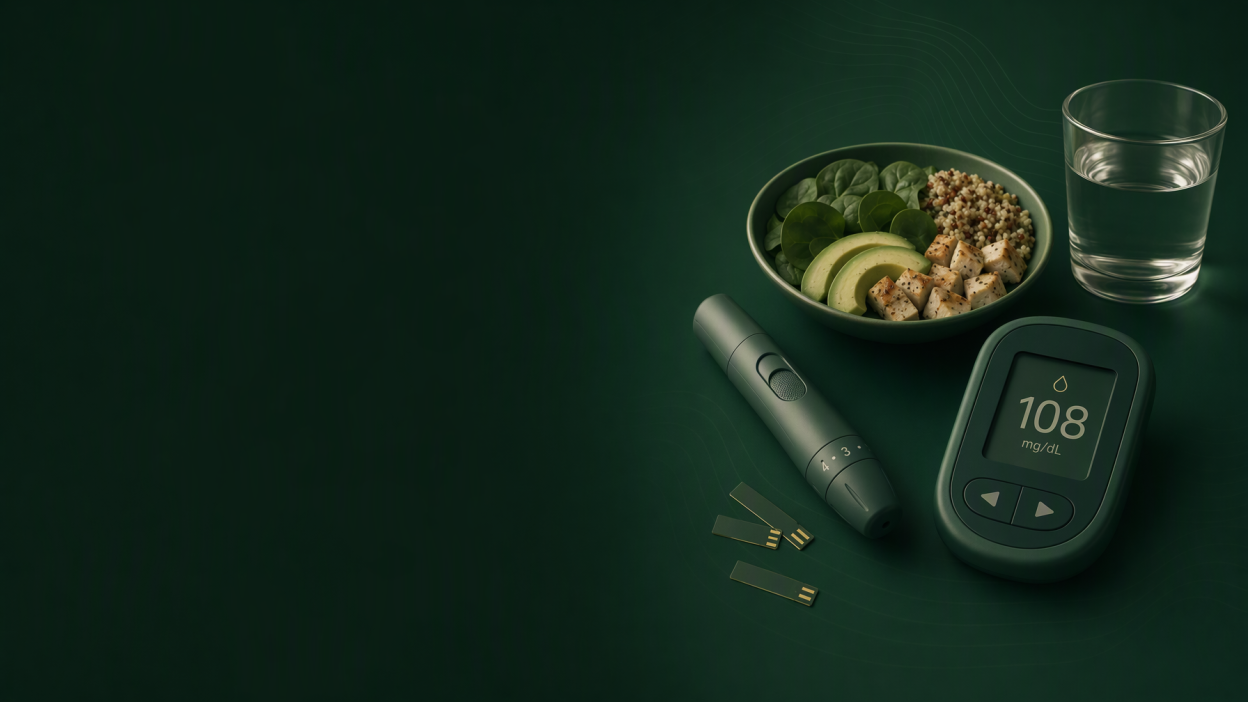
Aarav’s appointment lasts about fifteen minutes. His doctor explains insulin, meals and glucose checks. Aarav nods, understanding some of it and hoping the rest will make sense later.
By the time he gets home, he has a question neither of them got to: how is he going to do this every day? Lunch sometimes slips his mind. Dinner depends on when work ends. He has instructions for his diabetes, but he is still working out where they fit into his life.
We looked at what is happening inside his body in Type 1 Diabetes Beyond Blood Sugar. This is the part Aarav now has to learn: looking after it.
What is diabetes management?
In type 1 diabetes, the body can no longer make enough insulin to regulate how it uses and stores fuel. Taking insulin replaces what is missing. But the amount needed can change with food, activity, illness and other demands on the body. That is why treatment involves more than taking the same medicine and forgetting about it until tomorrow.
Diabetes management means learning how to respond to those changes. Too little insulin can leave glucose high and allow ketones, produced when fat is broken down for fuel, to build up. A large build-up can make the blood dangerously acidic. More insulin than the body needs at that moment can bring glucose too low. Keeping glucose within an agreed range helps someone feel well now and reduces the risk of problems over time.
For Aarav, this starts with knowing what to do on an ordinary day, and having instructions for a missed meal or an unexpected low.
First, knowing which type of diabetes you have
Type 2 diabetes is more common in adults, so an adult with newly raised glucose may initially be thought to have it. But type 1 can begin at any age. A person’s age or appearance cannot explain what their pancreas is doing.
Blood glucose tests and HbA1c help establish whether someone has diabetes. HbA1c reflects average glucose over roughly two to three months. These results do not identify the type on their own, so the doctor may need to look further.
One test looks for islet autoantibodies, immune proteins that recognise parts of the cells involved in making insulin. They are markers of the immune system targeting the body’s own tissue. Their presence helps the doctor investigate whether the diabetes is autoimmune.
Another blood test measures C-peptide, a short chain of amino acids released when the body makes insulin. It gives the doctor an idea of how much insulin production remains. The result is read alongside glucose levels and the person’s history.
Insulin has more than one job through the day
Aarav sometimes gets through an afternoon before realising he has missed lunch. His body has still been using energy. Between meals, the liver releases glucose to help keep that supply going. Insulin helps control how much it releases. That job continues overnight, while he is asleep.
Food adds another demand. After a meal, insulin helps muscle and fat cells take up glucose and helps the body store fuel. A treatment plan therefore needs to cover the hours between meals as well as the time of the meal.
The insulin Aarav uses will depend on the plan his doctor prescribes. Some people use injections: longer-acting insulin works gradually over many hours, covering the body’s needs between meals and overnight. Rapid-acting insulin starts working sooner and is often taken around meals to handle the rise in glucose after eating. Others use a pump, which delivers small amounts of rapid-acting insulin through the day, with extra doses for meals.
Whichever method someone uses, the aim is to keep glucose within the agreed range. The amount of insulin needed can change through the day. Aarav needs instructions for a late lunch that account for both the meal he has delayed and the insulin his body still needs between meals.
If forgetting lunch is becoming a pattern, his doctor needs to know. A meal reminder may take some of the remembering off his hands, while his insulin instructions need to allow for delays. A routine is easier to follow when it makes room for how he lives.
Why glucose needs attention through the day and night
A continuous glucose monitor, or CGM, is a small sensor that estimates glucose in the fluid between cells every few minutes. It shows how the level is changing, and many devices can alert someone when it is heading too low or high. A finger-prick meter gives a reading at the time of the check; the sensor helps fill in what happens between those checks.
That includes the hours Aarav is not thinking about diabetes. Insulin keeps working after he takes it. A meal, a more active afternoon or illness can change what his body needs. Stress hormones can raise glucose too, and sleep and daily rhythms can affect its regulation. The same dinner does not guarantee the same reading every evening.A low can develop overnight, and missing essential insulin can lead to dangerous highs and ketones. Regular monitoring helps someone respond before becoming very unwell.For the first few weeks, a more predictable routine may help Aarav see those patterns. Meals at roughly similar times, where possible, and notes about insulin, activity and readings give his doctor a clearer picture of what happens through the day and overnight. The timing still follows his own prescription. Over time, they can use what he learns to plan for days when meals or activity change.
A routine that leaves room for the rest of your life
Food gives Aarav somewhere familiar to begin. He remembers a friend saying nutrition gets less confusing once you understand what your food provides. Now he has a reason to look more closely.
That includes macronutrients – carbohydrate, protein and fat – and micronutrients, such as vitamins and minerals. Carbohydrate has the most direct effect on the rise in glucose after eating, but a nourishing diet needs more than carbohydrate counting alone. A diabetes educator or dietitian can help Aarav understand portions and build balanced meals around the rice, roti and other foods he already eats.
Exercise worries him less. He thinks about joining a dance class, or getting to the gym before work. Finding something he enjoys feels manageable. What he needs to learn is how that activity fits with his food and insulin, because glucose can drop during a workout or hours afterwards. His diabetes team can help him plan what to check, carry and adjust for the exercise he chooses.
Ask the doctor what regular supplies and follow-up will involve, including the costs. Planning for insulin, testing strips, sensors or pump supplies can make it easier to keep what is needed available.
Preventive healthcare for diabetes management
Once Aarav is home, diabetes management is no longer only about the prescription in his hand. It is also about whether the plan makes sense in the life he is actually living: meals that shift with work, family routines, travel across the city, festivals, budget, sleep and stress. That is where preventive care becomes practical. It helps him see the rest of his health clearly, spot problems early and understand which changes are realistic enough to keep up.
FOXO works in that gap between getting information and knowing what to do with it. Primer brings together test results, medical history, symptoms and everyday context into a personalised Playbook, reviewed by a FOXO Doctor. For someone like Aarav, that matters because diabetes does not sit in isolation. Food, sleep, stress, activity, weight change and other parts of health can all affect how manageable daily life feels.
After the Doctor review, OME helps him understand the Playbook in plain language and keep working through it between appointments. That can be useful when the question comes up at home instead of in the clinic: what to prioritise first, what a result means in context, or how to keep to a plan during a week that does not go to schedule. If another clinical review is needed, further Doctor consultations can be arranged.
Aarav’s diabetes doctor still manages insulin and treatment decisions. FOXO helps him make better sense of the wider picture around that treatment, so the plan is easier to follow in ordinary Indian life rather than only on a good, well-planned day. The future of diabetes care management
Insulin treatment takes over a job the body can no longer do well enough. Researchers are also trying to preserve the cells that can still make some insulin. Teplizumab is one example. In selected people with early-stage type 1 diabetes, it can delay progression to the clinical stage, when insulin treatment is usually needed.
In June 2026, the US Food and Drug Administration also gave it accelerated approval for certain children aged 8–17 who had recently been diagnosed, to slow further loss of insulin production. The approval was based on a marker of that production; further research must confirm the clinical benefit. This opens another possibility in care, but it needs specialist assessment and safety monitoring. It does not replace insulin, and availability in India needs to be checked.
Frequently asked questions
Do I need insulin if I have not eaten?
Yes, your body still needs insulin between meals and overnight. Food is only part of the reason insulin is needed. Mealtime doses may need to change if you eat less or skip a meal, depending on your prescription. Ask your diabetes team to explain both situations in writing. Stopping all insulin because you have not eaten can be dangerous.
What should I do if I forget a meal after taking insulin?
The answer depends on the insulin, when you took it and your current glucose. Mealtime insulin may keep lowering glucose even when the food has not arrived. Follow the missed-meal and low-glucose instructions your team gave you, and contact them if you are unsure. If this happens often, say so at review; the plan needs to reflect how your day tends to go.
Can I eat rice and roti with type 1 diabetes?
Yes. Rice and roti contain carbohydrate, which affects glucose, but they do not have to disappear from your meals. Learning portions and how your prescribed insulin relates to food is the important part. A diabetes educator or dietitian can work with foods you normally eat. Cutting out sweets alone does not account for the carbohydrate elsewhere on the plate.
Do I have to wear a glucose sensor all the time?
CGM generally helps most when used regularly, and type 1 diabetes usually needs ongoing glucose monitoring. That does not mean you must keep using a device that is causing problems. Tell your team about skin irritation, troublesome alarms or practical difficulties. If you take a break or change devices, agree how and when you will check glucose in the meantime.
Why do I still need a finger-prick meter with a sensor?
A sensor estimates glucose between cells, which can lag behind blood glucose when levels change quickly. A meter is useful if the sensor stops working, gives an unexpected result or does not match how you feel. Keep one available and follow the manufacturer’s instructions and your care plan. Feeling unwell deserves attention even when the sensor reading looks within range.
Can stress affect my blood sugar?
Yes. Stress hormones can increase glucose, and stress can also make meals, sleep and insulin routines harder to keep up with. It does not mean every unusual reading is caused by worry. Check glucose when symptoms occur and tell your team about recurring patterns. Severe symptoms, high ketones or signs of ketoacidosis need urgent care, even during a very stressful day.
Can I walk after taking insulin?
Often yes, but activity can lower glucose while insulin is working and sometimes for hours afterwards. The effect depends on the activity, food, timing and insulin already in the body. Ask your team how to prepare for the activities you enjoy, including what to check and carry. There is no single rule that everyone with type 1 diabetes must walk before or after dinner.
What should I do if glucose stays high while I am using a pump?
Follow your instructions for checking the pump, testing ketones and using backup insulin when needed. A pump cannot correct a high if insulin is not reaching your body. Contact the diabetes team when the problem persists or you are uncertain. Vomiting, high ketones, deep breathing or marked drowsiness need urgent assessment rather than waiting for another automated adjustment.
What does my HbA1c number mean?
HbA1c gives an idea of average glucose over roughly two to three months. The number used to diagnose diabetes is different from the treatment goal set for someone already living with it. Your doctor should explain which goal applies to you and how to reach it safely. A lower average is not automatically better if it hides frequent lows; the daily pattern matters too.
Can an AI health coach change my insulin dose?
OME helps explain the Doctor-reviewed Playbook and supports following it in everyday life. It does not prescribe insulin or independently change doses. If a reading, meal delay or new symptom raises a treatment question, use the instructions from your diabetes team or contact them. AI can help you understand what to ask, while the clinical decision remains with a qualified professional.