
You can count the hours since your last meal. That does not mean you can see what your cells are doing.
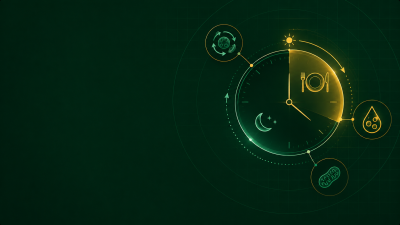
Fasting is easy to time. You know when dinner ended. By the following morning, you can calculate exactly how many hours have passed without food. What the clock cannot tell you is what happened inside your liver, muscles, brain or immune cells during that time.
Some fasting apps and online autophagy trackers divide those hours into stages such as fat burning, ketosis and autophagy. These are timeline-based estimates, not measurements of cellular activity. Autophagy, the process through which cells break down damaged material and reuse useful components, does not suddenly begin everywhere in the body at hour 16. It already operates at a baseline level, and its activity changes across tissues in response to food, exercise, metabolic state and other signals.
Two people can follow the same schedule and still respond differently. Biology, inconveniently, does not run on one clock.
That makes the useful question less catchy, but much better: what can human research actually tell us about autophagy and healthspan?
For the cellular machinery itself, read What Is Autophagy? Inside the Cell’s Recycling System. Here, we begin with the human being around the cells.
Healthspan Is Bigger Than One Cellular Pathway
Lifespan is the number of years lived. Healthspan asks what those years are like: how long someone can think clearly, move well, recover, regulate energy and remain independent. Autophagy belongs in that conversation because long-lived tissues need maintenance. Proteins lose their shape. Mitochondria become damaged. Cellular parts wear out.
FOXO uses a simple four-stage working frame. It is not a diagnostic scale, and one person may occupy different stages across different systems.
HEALTHY → COMPENSATING → STRAINED → DISEASED
- Healthy: The body handles ordinary stress and returns to its usual baseline without persistent loss of function.
- Compensating: Early changes are present, but the body is working harder to keep everyday function looking normal.
- Strained: Compensation is becoming less effective, and symptoms, biological changes or loss of capacity are becoming harder to ignore.
- Diseased: A clinical condition is established and requires diagnosis, treatment and ongoing medical management.
Autophagy may be part of that maintenance story. But a muscle cell clearing damaged material is not yet strong legs, and a brain cell recycling a worn component is not yet preserved memory. Between the cell and the person sit tissues, organs and years of interacting biology.
Why Autophagy Became a Healthspan Question
In 2023, scientists named disabled macroautophagy, the best-studied form of autophagy, as one of the 12 hallmarks of ageing. The important word is one. Autophagy sits beside mitochondrial dysfunction, chronic inflammation, cellular senescence and other connected processes.
The question is not whether the pathway matters but how much of that biological relevance can be demonstrated in living people.
What Human Studies Have Found
Human studies work with tissues that can be sampled safely. They may examine muscle, blood cells, gene activity or proteins involved in the pathway.
Researchers often look for autophagic flux, meaning whether material moved through the entire recycling pathway and was finally broken down, rather than merely accumulating somewhere along the way.
That sounds like a laboratory detail. It is actually the central problem: more recycling machinery is not the same as more successful recycling.
| Human study | What researchers found | What it does not prove |
| Exercise study, 2015 | Muscle samples from 23 trained adults showed a marker pattern interpreted as greater flux after high-intensity cycling. Intensity mattered more than training while fasted. | That every workout changes autophagy throughout the body or improves healthspan. |
| Intermittent time-restricted eating trial, 2025 | In 121 adults with obesity, the six-month change in flux differed between intermittent eating and standard care. | Flux did not rise significantly from baseline within the intermittent-eating group. The comparison was exploratory and used blood immune cells only. |
| Fasting-mimicking diet pilot, 2025 | One of two six-day diet formulations produced a possible flux signal in blood cells. | The study included only 30 people, lasted eight days and measured no lasting healthspan outcome. |
| SOMMA study, 2024 | In 575 older adults, autophagy-related gene patterns in muscle were associated with walking speed, leg power and fitness. | The study was observational and measured gene activity, not flux or cause and effect. |
Together, these studies suggest that autophagy-related activity in particular human samples can vary with context. They do not show that deliberately increasing autophagy extends human life.
Why Mice Give Cleaner Answers Than People
Most of the clearest mechanistic evidence still comes from animals. In a mouse, researchers can alter a gene, control food, sample organs and follow an entire lifespan. Human studies cannot repeatedly biopsy healthy brains, hearts and livers or control decades of ordinary life.
Rodents also use energy much faster than humans, so the same fasting duration creates a different challenge. Animal research can show that a mechanism matters. It cannot tell you that your 16:8 routine increased autophagy throughout your body.
Why Autophagy Is So Difficult to Measure
Imagine finding more rubbish bags in a corridor. Perhaps the cleaners are working faster. Or perhaps the collection truck never arrived. Counting the bags cannot tell you which story is true.
An autophagosome is a temporary membrane sac that collects cellular material for recycling. Seeing more autophagosomes might mean collection has increased. It might also mean the process has stalled before the material reached the lysosome, the cell’s breakdown compartment.
That is why flux matters. Researchers have to estimate movement through the pathway, not count one structure or protein. Specialised methods can estimate flux in fresh blood cells, but a result from those cells does not become a reading of the liver, muscle and brain. Measurement guidelines therefore recommend combining methods rather than treating one marker as proof that the entire pathway accelerated.
There is currently no validated routine test that can tell you how much autophagy is happening throughout your body, when it began or whether more would be useful in every tissue.
What Should We Measure Instead?
Autophagy can explain why an intervention is biologically interesting. It cannot stand in for the outcome.
Useful measures include glucose regulation, lipids, body composition, strength, fitness, sleep, energy, appetite and recovery. None is an indirect autophagy test. Together, they describe whether the person is functioning better, worse or differently.
The practical question is not, Did I activate autophagy?
It is, What changed, can I measure it, and did the change last?
Where FOXO Primer Fits
FOXO does not offer an autophagy score or claim that hour 16 switched cellular recycling on.
It focuses on the compensating stage, when output may still look acceptable but the wider pattern deserves attention. FOXO uses systems biology, which reads how body systems interact, to bring history, symptoms, lifestyle and measured biology together, then asks what changed and what needs reassessment.
That is the role of FOXO Primer here: not to turn a mechanism into a verdict, but to turn a longevity claim into questions that can be checked.
Autophagy may help cells preserve themselves. The goal is not certainty that “clean-up” happened. It is to preserve the strength, clarity, resilience and independence that the process is supposed to support.
FAQs
What Is Autophagy in Simple Terms?
Autophagy is a family of processes cells use to break down some damaged, worn-out or unnecessary material. In macroautophagy, the best-studied form, material is enclosed inside an autophagosome and delivered to a lysosome for breakdown. Some of the resulting components can then be reused.
When Does Autophagy Begin During Fasting?
Human research has not established one fasting hour at which autophagy suddenly begins throughout the body. Autophagy already operates at a baseline level. Its activity can change by tissue and may be influenced by nutrient availability, exercise, metabolic state, recent meals and other signals.
Does a 16-Hour Fast Trigger Autophagy?
A 16-hour fast may change nutrient-sensing pathways linked with autophagy, but hour 16 is not a validated whole-body threshold. The same fasting duration can produce different responses in different people and tissues. A clock confirms elapsed time, not cellular recycling.
Can a Fasting App Measure Autophagy?
No. A fasting app can record when a fast began, count the hours and sometimes estimate metabolic stages from time and user-entered information. It cannot directly measure autophagic flux inside the liver, brain, muscle or immune system.
Can a Blood Test Measure Autophagy?
Specialised research methods can estimate autophagic flux in selected blood cells under controlled conditions. That is different from a routine blood test, and the result cannot be treated as a whole-body autophagy score. It describes those cells, sampled and tested in a particular way.
What Is Autophagic Flux?
Autophagic flux describes movement through the complete recycling pathway: material is collected, transported to a lysosome and broken down. It matters because a single snapshot can be misleading. More autophagosomes may mean faster collection, or they may mean the later breakdown stage has stalled.
Is Autophagy the Same as Ketosis?
No. Ketosis describes a metabolic state in which the liver produces ketones and the body uses more fat-derived fuel. Autophagy is a cellular recycling process. The two may occur during overlapping conditions, such as fasting, but one does not prove that the other is happening throughout the body.
Does Autophagy Burn Body Fat or Cause Weight Loss?
Autophagy is not a direct body-fat-burning mechanism. Weight change depends on energy intake, expenditure and many other factors. Fasting may affect both fuel use and autophagy-related signalling, but losing weight does not prove that autophagy increased, and increasing an autophagy marker does not guarantee weight loss.
Does Exercise Increase Autophagy in Humans?
Human muscle-biopsy studies show that certain forms of exercise can change autophagy-related signalling or marker patterns in skeletal muscle. The response can depend on intensity, timing, training status and how it is measured. This does not establish a uniform whole-body increase or a direct healthspan benefit.
Is Fasted Exercise Better for Autophagy?
Current human evidence does not support a general rule that fasted exercise is better. In the exercise study discussed above, intensity appeared more important than whether participants trained while fasted. That finding came from sampled muscle and should not be turned into a universal exercise prescription.
Is More Autophagy Always Better?
No. Autophagy is a regulated process, not a score to maximise. A higher marker can reflect useful activity, a response to stress or a blockage later in the pathway. What matters is whether the complete process is functioning appropriately in the relevant tissue and whether the person benefits.
Does Increasing Autophagy Extend Human Lifespan or Healthspan?
Animal studies give researchers good reasons to investigate that possibility. Human studies have not shown that deliberately increasing autophagy, by itself, extends lifespan or healthspan. They have measured selected markers, genes or flux in particular tissues and cells, not decades of preserved human function caused by autophagy.
What Should I Track if I Cannot Track Autophagy?
Track the outcome the intervention is meant to improve. Depending on the goal, that may include glucose regulation, lipids, body composition, strength, fitness, sleep, energy, appetite, symptoms or recovery. None is an autophagy test, but each can show whether something meaningful changed.