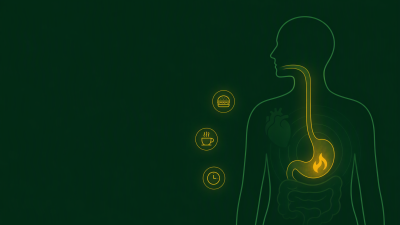


SIBO stands for small intestinal bacterial overgrowth. It means that excessive numbers of bacteria are present in the small intestine, where bacterial numbers are normally much lower than in the colon.
At breakfast, your stomach feels normal. By lunch, it feels tighter. By evening, you are replaying everything you ate: the dal, the milk in the chai, the onions, the wheat. After enough days like this, food itself starts to look guilty.
Then somewhere in the search for an explanation, four letters appear: SIBO.
The easiest way to picture it is as fermentation happening too early, and in the wrong part of the gut. Your small intestine is where much of digestion and nutrient absorption takes place. When more bacteria than expected are present there, they can ferment carbohydrates before that food reaches the colon. More gas and other fermentation products are produced higher up the digestive tract, which can contribute to bloating, abdominal discomfort and changes in bowel habits.
SIBO Symptoms
SIBO symptoms commonly include bloating, gas, abdominal discomfort and bowel changes, but these symptoms are not specific to SIBO.
SIBO symptoms are frustratingly familiar: bloating, gas and bowel changes can also happen in IBS, coeliac disease, food intolerances and several other gut conditions. They can make SIBO worth looking into, but they cannot tell you on their own that SIBO is the answer.
Common SIBO symptoms include:
- Bloating or visible abdominal distension, often more noticeable after meals
- Excess gas
- Abdominal pain, pressure or cramping
- Diarrhoea
- Constipation, or a mix of constipation and diarrhoea
- Feeling uncomfortably full soon after starting a meal
- Nausea in some people
- Fatigue, particularly when digestive symptoms are persistent or nutrient absorption is affected
For some people, bloating after meals is the symptom that dominates everything else. A meal arrives, fermentation increases, gas stretches the intestine and the abdomen can feel progressively tighter. But that pattern is not unique to SIBO. The timing is a clue, not a diagnosis.
Why can one person have diarrhoea and another have constipation?
Hydrogen is more often associated with diarrhoea, while methane is more strongly associated with constipation and slower intestinal transit.
Part of the answer is the gas being measured. Hydrogen production is more often associated with diarrhoea. Methane is more strongly associated with constipation and slower intestinal transit.
Methane is produced mainly by organisms called methanogens, which are archaea rather than bacteria, and they can live in the small intestine or the colon. So what is often called “methane SIBO” online is more precisely called intestinal methanogen overgrowth, or IMO.
In more significant or long-standing SIBO, digestion and absorption can also be affected. Vitamin B12 and fat-soluble vitamin abnormalities, weight loss or other signs of malabsorption can occur, although these are not what every person with SIBO experiences.
What Causes SIBO?
SIBO develops when the small intestine allows bacteria to accumulate more than it should, often because gut movement, anatomy or protective mechanisms are impaired.
The small intestine is not passive tubing. Between meals, it runs waves of muscular activity that help move leftover food and bacteria forward. One of these patterns is called the migrating motor complex, or MMC. Think of it as a periodic sweep through the small intestine. If that movement is repeatedly impaired, material spends longer sitting in one place and bacteria have more opportunity to accumulate.
Several routes can lead to that situation.
Slower intestinal movement
Slower intestinal movement can increase the risk of SIBO by allowing intestinal contents to stay in place longer.
Conditions that affect the nerves or muscles of the digestive tract can slow transit. Diabetes, systemic sclerosis and some neurological or motility disorders are examples. Some medicines, particularly opioids, can also slow the gut.
Changes in gut structure
Structural changes in the gut can increase the risk of SIBO by creating areas of relative stasis.
Previous abdominal surgery, strictures, diverticula, blind loops or changes around the ileocecal valve can create areas where intestinal contents do not move forward normally. A pocket of relative stasis gives bacteria more time to multiply.
Stomach acid and other protective mechanisms
Stomach acid helps limit how many microbes survive the journey into the small intestine, which is why proton pump inhibitors are studied as a possible SIBO risk factor
Stomach acid does more than help digest food. It also kills many of the microbes that enter with food and saliva before they travel further into the digestive tract. Proton pump inhibitors, or PPIs, are medicines such as pantoprazole and omeprazole, commonly prescribed for acid reflux and ulcers. Put simply, they reduce how much acid your stomach makes.
That is why PPIs come up in SIBO research. If stomach acid stays lower for long periods, more microbes may survive the journey into the small intestine. Studies, including a 2025 meta-analysis, have found SIBO more often in people using PPIs, with a stronger association in longer-term use. That still does not prove that PPIs directly cause SIBO in an individual; gut motility, anatomy and underlying conditions also matter.
So if you take a PPI regularly, the takeaway is not to stop it because you are worried about SIBO. Instead, review with your doctor whether you still need it, particularly if you have persistent gut symptoms. Taking a PPI is one possible risk factor, not a SIBO diagnosis.
How Is SIBO Diagnosed?
SIBO is usually diagnosed with hydrogen-methane breath testing, but results must be interpreted alongside symptoms, history and test conditions.
SIBO symptoms overlap too heavily with other digestive conditions, and even the tests used for SIBO need context.
What actually happens during a SIBO breath test?
A SIBO breath test measures hydrogen and methane produced by microbes after you drink glucose or lactulose and provide timed breath samples.
A breath test can look almost too simple for what it is trying to measure. After following the test’s preparation instructions, you provide a baseline breath sample, drink a measured glucose or lactulose solution, and then give more breath samples at timed intervals for the next few hours.
The clever part happens between your gut and your lungs. Microbes ferment the test sugar and produce gases such as hydrogen and methane. Some of that gas is absorbed into the bloodstream, carried to the lungs and breathed out. The laboratory plots how those levels change over time. An early hydrogen rise can support a diagnosis of SIBO; methane measurements are used when assessing IMO.
So the test is not just asking, “Is there gas?” It is asking which gas appears, how much, and when.
What do the breath-test numbers mean?
Many laboratories use a hydrogen rise of 20 parts per million or more above baseline within 90 minutes as a positive SIBO pattern, while methane of 10 parts per million or more at any point is commonly treated as methane-positive.
Many laboratories use a hydrogen rise of 20 parts per million or more above baseline within 90 minutes as a positive SIBO pattern. Methane of 10 parts per million or more at any point is commonly treated as methane-positive.
Read that as a pattern, not a verdict. If hydrogen rises early, the test is suggesting that fermentation happened before the sugar was expected to reach the colon. If methane is elevated, the result may fit IMO, particularly when constipation is part of the picture. The number still has to be interpreted alongside your symptoms, medical history and how the test was performed.
Glucose or lactulose: why are there two different drinks?
Glucose and lactulose test different parts of the small intestine and can produce different results.
Glucose is absorbed relatively early in the small intestine. That can make it more specific for overgrowth in the upper small bowel, but it may miss overgrowth further down. Lactulose is not absorbed in the same way, so it travels further through the intestine. The trade-off is that if it reaches the colon quickly, colonic fermentation can look like an early small-intestinal signal. This is one reason different testing protocols can produce different answers.
Why can a SIBO breath test be wrong?
A SIBO breath test can be wrong because it is an indirect measurement affected by preparation, antibiotics, transit, test substrate and interpretation.
Because it is an indirect measurement. Preparation, recent antibiotics, the test substrate, intestinal transit and the way the curve is interpreted can all affect the result. False positives and false negatives happen. Newer 2026 guidance continues to emphasise standard preparation, measuring both hydrogen and methane, and cautious interpretation when gut anatomy or transit is unusual.
That does not make breath testing useless. It means a positive or negative result should not be treated as a diagnosis floating by itself.
What about a small-intestinal aspirate?
A small-intestinal aspirate is a more direct but more invasive test, and it still has limitations.
The more direct approach is to collect fluid from the small intestine during an endoscopy and analyse or culture what is in it. It is often treated as a reference test because the sample comes from the intestine itself. But it is invasive, not routinely available everywhere, and it has its own problems: bacterial overgrowth can be patchy and samples can be contaminated. Even this test does not remove all uncertainty.
What Does SIBO Research in India Tell Us?
Indian and Asian evidence suggests there is no single national prevalence figure for SIBO in India because prevalence depends heavily on who is tested and how SIBO is diagnosed.
There is no clean national number for how common SIBO is in India. The 2022 Asian-Pacific SIBO consensus, led by the Indian Neurogastroenterology and Motility Association, makes an important observation: the apparent prevalence of SIBO changes substantially depending on who is being tested and which diagnostic method is used.
The Indian-led consensus also shows why different tests can give different answers: glucose and lactulose breath tests do not always line up neatly with aspirate culture. A test can be easy to order without being easy to interpret.
For you, the practical takeaway is not that SIBO behaves differently in an Indian gut. It is that Indian and Asian evidence gives us a better reason to be careful with borrowed prevalence numbers and one-size-fits-all diagnostic claims. If your symptoms fit the pattern, the question is not “What percentage of people online have SIBO?” It is whether SIBO is a plausible explanation in your particular history, and whether the right test has been used and read properly.
SIBO Treatment and Management
SIBO treatment aims to reduce the current overgrowth and address the reason the overgrowth developed.
SIBO treatment has two jobs. The first is to reduce the current overgrowth. The second is to work out why the small intestine became a place where overgrowth could happen in the first place. If you do only the first, the original conditions may still be waiting when treatment ends.
Antibiotics
Antibiotics are the most studied medical treatment for SIBO, and rifaximin is one of the medicines doctors commonly use.
Antibiotics are the most studied medical treatment for SIBO. Rifaximin is one of the medicines doctors commonly use. Unlike many antibiotics that circulate widely through the body, only a small amount of rifaximin is absorbed into the bloodstream, so most of it stays inside the digestive tract, where the bacterial overgrowth is.
So how well does it work? If you turn the pooled research into ten people, roughly six or seven had a breath test that no longer met the study’s SIBO criteria after rifaximin. That sounds reassuring, but it is not the same as saying six or seven out of ten people will feel completely better. The studies used different breath tests, doses and treatment durations, and many were not high-quality randomised trials.
A doctor still has to ask what your symptoms look like, what the breath test actually showed, whether methane or IMO is part of the picture, and what may have allowed the overgrowth to develop in the first place. Those details affect whether an antibiotic is appropriate, which one is used and for how long. It is not something to choose for yourself from a positive breath-test result.
Why can SIBO come back?
SIBO can come back if treatment reduces the overgrowth without fixing the reason it developed.
SIBO can come back because antibiotics may reduce the overgrowth without changing the reason it developed. If the small intestine is still moving too slowly, or there is an area where food and bacteria tend to sit for longer than they should, the same environment that allowed the overgrowth the first time may still be there after treatment ends.
That is why recurrence is not unusual. In one older follow-up study, roughly 35 of 80 people whose SIBO had initially cleared had a positive glucose breath test again within nine months. That does not mean you have a 44% chance of relapse. It simply shows that clearing the bacteria once is not always the end of the story.
So treatment often has to ask a second question: what made the overgrowth possible? A medicine that slows the gut may need reviewing. A motility problem or structural change may need its own treatment. And if SIBO has affected nutrient absorption, deficiencies may need correcting too.
SIBO Diet: What Can Food Actually Change?
Food can reduce SIBO symptoms, but it does not necessarily remove the overgrowth itself.
Food can make SIBO symptoms quieter without necessarily removing the overgrowth itself. That is the main distinction.
A low-FODMAP diet cuts back on carbohydrates that gut microbes ferment easily. For some people, that means less gas, bloating or pain. But the strongest evidence for low-FODMAP eating comes from IBS, not from people with confirmed SIBO.
So if it is used for SIBO, it makes more sense as a short symptom-management experiment than as a cure: reduce certain foods for a period, notice what changes, then reintroduce them rather than making the diet smaller and smaller indefinitely.
And the idea of simply “starving the bacteria” is too simplistic. In a small pilot involving healthy participants, a low-fibre, high-simple-sugar diet triggered gut symptoms and reduced small-intestinal microbial diversity. The same study also found that bacterial counts did not neatly track with symptom severity. More restriction is not automatically better.
SIBO vs SIFO: Bacterial vs Fungal Overgrowth
SIBO and SIFO are different conditions: SIBO involves excess bacteria, while SIFO involves fungal overgrowth in the small intestine.
SIBO is sometimes confused with SIFO, or small intestinal fungal overgrowth. The names sound similar because both refer to an overgrowth in the small intestine, but SIFO involves fungi, rather than excess bacteria.
The confusing part is that the symptoms can look almost identical: bloating, gas, abdominal pain and altered bowel habits. A hydrogen-methane breath test used for SIBO does not diagnose SIFO. SIFO is generally investigated by analysing a small-intestinal sample obtained during endoscopy.
A negative SIBO breath test therefore does not automatically mean SIFO, and persistent symptoms are not a reason to self-treat for fungal overgrowth.
How FOXO Approaches Gut Health
FOXO Primer helps place gut symptoms in the context of your broader medical history, lifestyle information and blood and urine markers, while keeping SIBO as a separate clinical question that may need dedicated testing.
Gut symptoms make more sense when you can see what is happening around them. Bloating may be the thing you notice first, but by itself it does not tell you very much. What happens before and after meals? Have your bowel habits changed? Has your weight shifted? Are there signs of a nutrient deficiency? What medicines are you taking? And what have your usual patterns of eating, movement, sleep and stress looked like over time, rather than on one unusually good or bad day?
That is where FOXO Primer comes in. It brings together your medical and symptom history, lifestyle information and blood and urine markers instead of looking at any one of them in isolation. The aim is to understand how the pieces connect. If a gut symptom is showing up alongside a nutritional deficiency, changes in glucose regulation, thyroid-related findings, poor sleep or another pattern, that context matters when your playbook is built and reviewed by a FOXO Doctor.
The same thinking shapes FOXO’s five lifestyle pillars: nutrition, physical activity, sleep, stress management and supplements. A recommendation in one pillar should not be made as though the others do not exist. Changing food, for example, can affect energy, glucose, training and even sleep. The point is to make lifestyle changes from the evidence in your own health picture, not from a generic checklist.
And sometimes that wider picture tells you that lifestyle is not the next step. If your symptoms or history suggest that you need a breath test, endoscopy or specialist assessment, that becomes a clinical next step. FOXO Primer can help get the basics in order and make it clearer when the question has moved beyond lifestyle and needs investigation in a clinic or hospital.
Frequently Asked Questions
What does SIBO stand for?
SIBO is the abbreviation for small intestinal bacterial overgrowth: excessive numbers of bacteria in the small intestine associated with gastrointestinal symptoms. Older material may also use terms such as small bowel bacterial overgrowth or bacterial overgrowth syndrome.
What are the most common SIBO symptoms?
The most common SIBO symptoms include bloating, excessive gas, abdominal discomfort or pain and diarrhoea. Constipation can occur too, particularly when methane is elevated and the pattern is better classified as intestinal methanogen overgrowth.
Can SIBO cause bloating after meals?
Yes. SIBO can contribute to bloating after meals because microbes in the small intestine may ferment carbohydrates earlier than expected and generate gas. But bloating after every meal has many possible causes, so meal-related bloating alone cannot confirm SIBO.
How is SIBO diagnosed?
Hydrogen-methane breath testing is the most common non-invasive approach. You drink glucose or lactulose and provide timed breath samples while the test tracks gas produced by microbial fermentation. Small-intestinal aspirate testing is more direct but invasive. Neither result should be interpreted without the clinical context.
What foods should you avoid with SIBO?
There is no universal SIBO food blacklist. Some people notice more symptoms after foods high in fermentable carbohydrates, which is why a short, structured low-FODMAP approach may be used for symptom control. It should not automatically become a permanent diet, and the evidence for low-FODMAP eating is much stronger in IBS than in confirmed SIBO.
Can you cure SIBO naturally?
There is not strong evidence that a diet, supplement or herbal protocol reliably clears SIBO on its own. Lifestyle and dietary changes may reduce symptoms or help address contributing factors, but studies of herbal, probiotic and dietary alternatives are still small and inconsistent. They should not be treated as proven equivalents to standard medical treatment.
Does a low-FODMAP diet cure SIBO?
No. A low-FODMAP diet may reduce fermentable carbohydrates and improve bloating, pain or gas in some people, but it has not been shown to reliably eradicate SIBO. Most high-quality low-FODMAP trials are in IBS, which is why diet should be framed as symptom management rather than a cure.
Can SIBO come back after treatment?
Yes. SIBO can recur, particularly when the factor that allowed overgrowth to develop is still present. That is why treatment often includes looking for motility problems, structural issues, medicines or other conditions that may be contributing, rather than simply repeating antibiotics indefinitely.
Is SIBO the same as IBS?
No. IBS is a disorder of gut-brain interaction diagnosed from a characteristic symptom pattern. SIBO refers to excessive bacteria in the small intestine and is investigated with microbiological or breath-testing methods. The two can overlap, but the relationship is complicated, and studies produce very different overlap rates depending on which SIBO test is used.
Is methane SIBO different from hydrogen SIBO?
Yes, although “methane SIBO” is not the most precise name. Hydrogen-dominant patterns are more often associated with diarrhoea. Methane is produced mainly by methanogens rather than bacteria and is associated with constipation and slower transit, so current terminology uses intestinal methanogen overgrowth, or IMO.
Can SIBO cause vitamin deficiencies?
It can in more significant or prolonged cases. Excess microbes and changes in bile-acid handling can interfere with nutrient absorption, including vitamin B12 and fat-soluble vitamins. Unexplained weight loss, anaemia or persistent nutritional deficiencies deserve medical assessment rather than being assumed to be SIBO.
Are probiotics helpful for SIBO?
Possibly, but the evidence is not strong enough to treat probiotics as a reliable SIBO therapy. Different studies use different strains and patient groups, and a 2024 systematic review judged the overall evidence to be low quality and highly variable. If a probiotic consistently worsens your bloating or discomfort, adding more strains is not necessarily the answer.
Can FOXO Primer help if I have persistent bloating or suspected SIBO?
FOXO Primer can help put persistent gut symptoms in a wider health context. It brings together your medical and symptom history, lifestyle information and blood and urine markers, then uses that picture to build a personalised playbook reviewed by a FOXO Doctor. That can help show whether nutrition, sleep, physical activity, stress, medicines or measured health patterns deserve attention, while keeping SIBO as a separate clinical question that may need a breath test or specialist assessment.
Does FOXO Primer include a SIBO breath test?
FOXO Primer’s standard assessment uses blood and urine testing; a SIBO breath test is a separate gastrointestinal investigation. If your symptoms and history make SIBO a plausible explanation, that can become the next clinical question to investigate rather than something inferred from the Primer panel alone. This article is for educational purposes and does not diagnose or replace professional medical advice. Persistent diarrhoea, unexplained weight loss, blood in the stool, repeated vomiting, fever, severe abdominal pain or evidence of significant malnutrition should be medically assessed rather than self-treated as SIBO.